Ranu MukherjeeTuning Forest
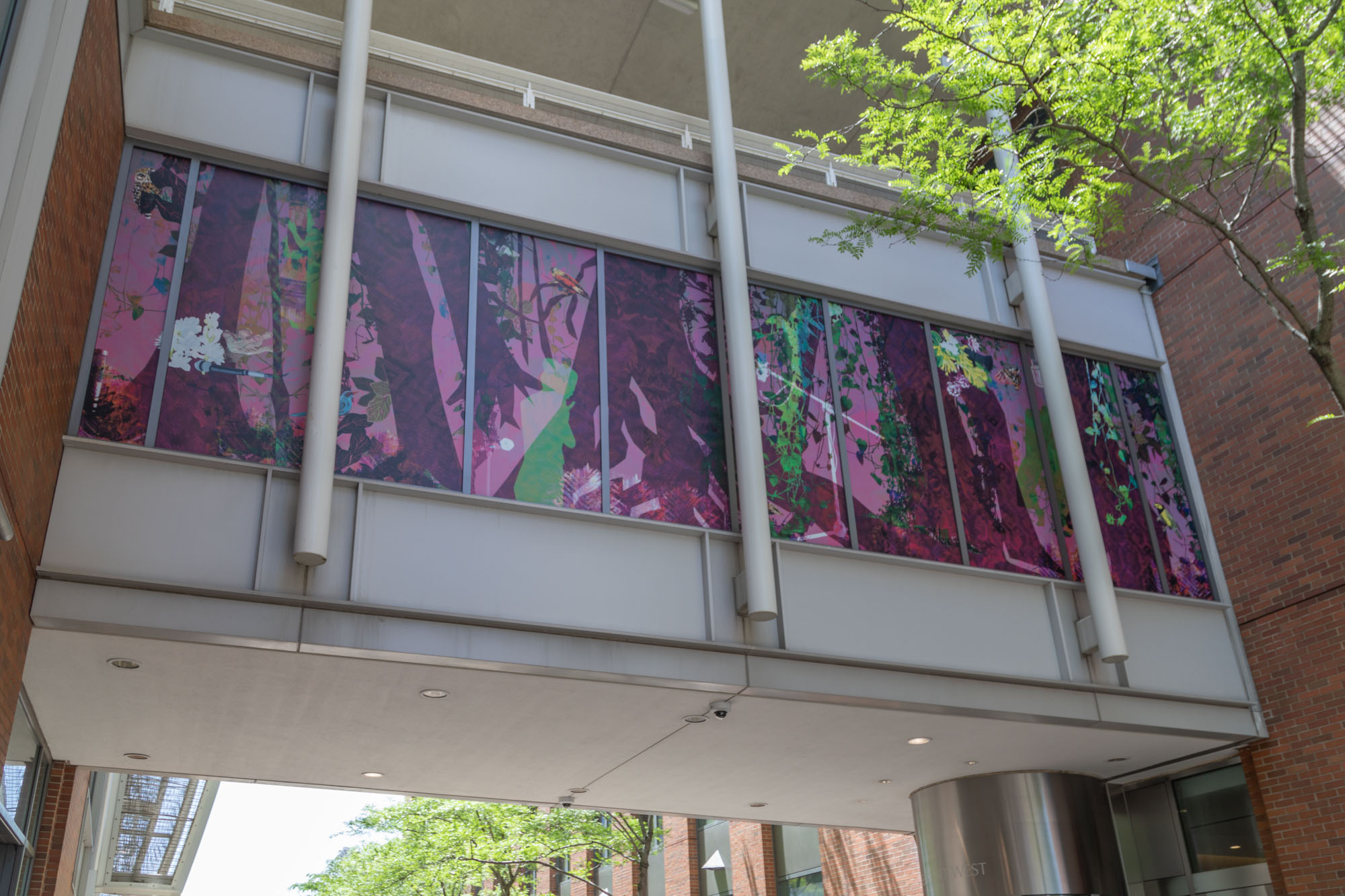
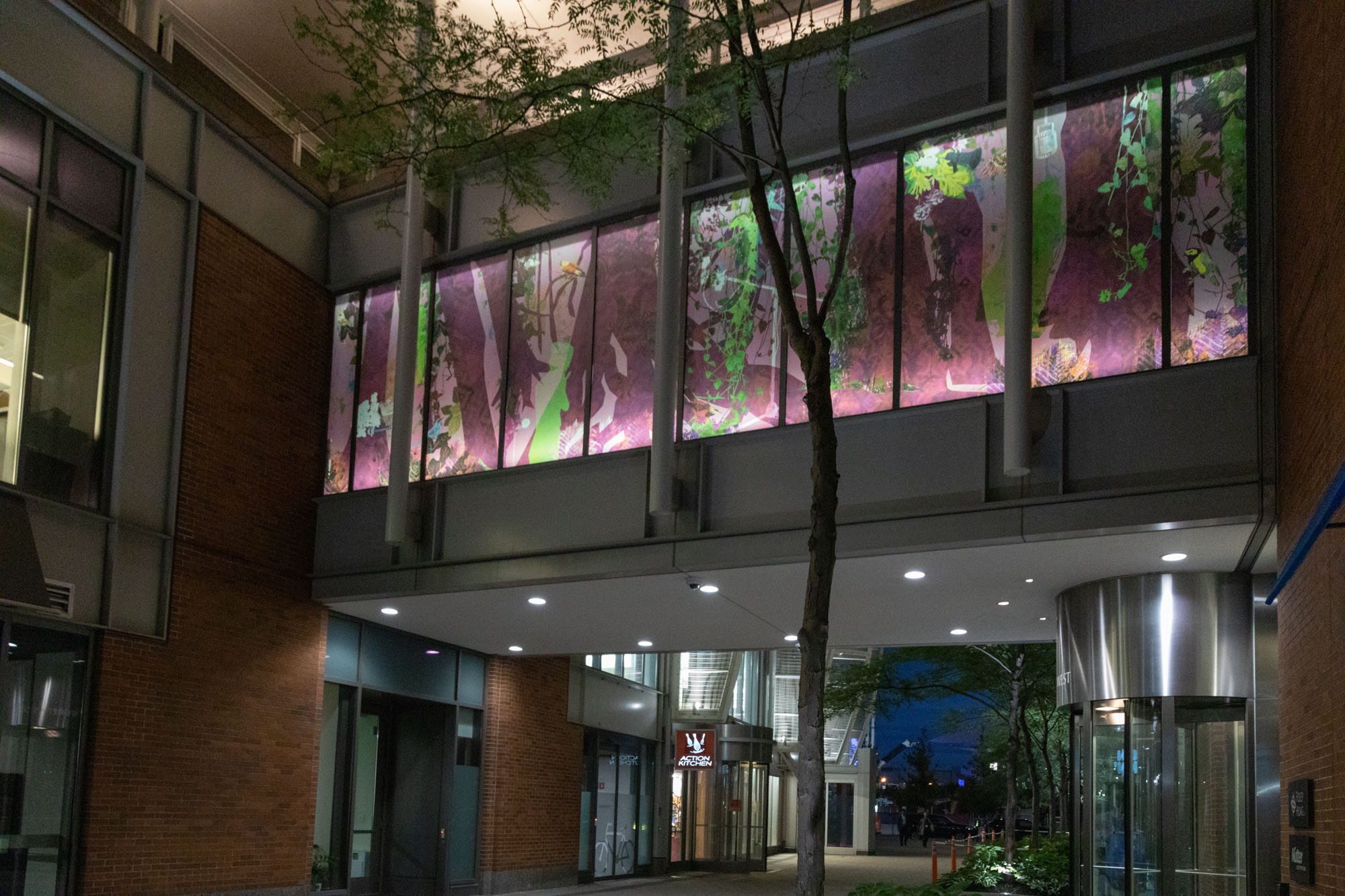
Ranu Mukherjee layers pattern, texture, and symbol to investigate colonial legacies, feminist futures, and ecological imperatives. In Tuning Forest, Mukherjee imagines the forest as the protagonist in a narrative about biodiversity and interspecies communication in our changing environment. Made of translucent vinyl, the work presents a lush forest in the middle of the Seaport, advocating for harmonious coexistence with nature.
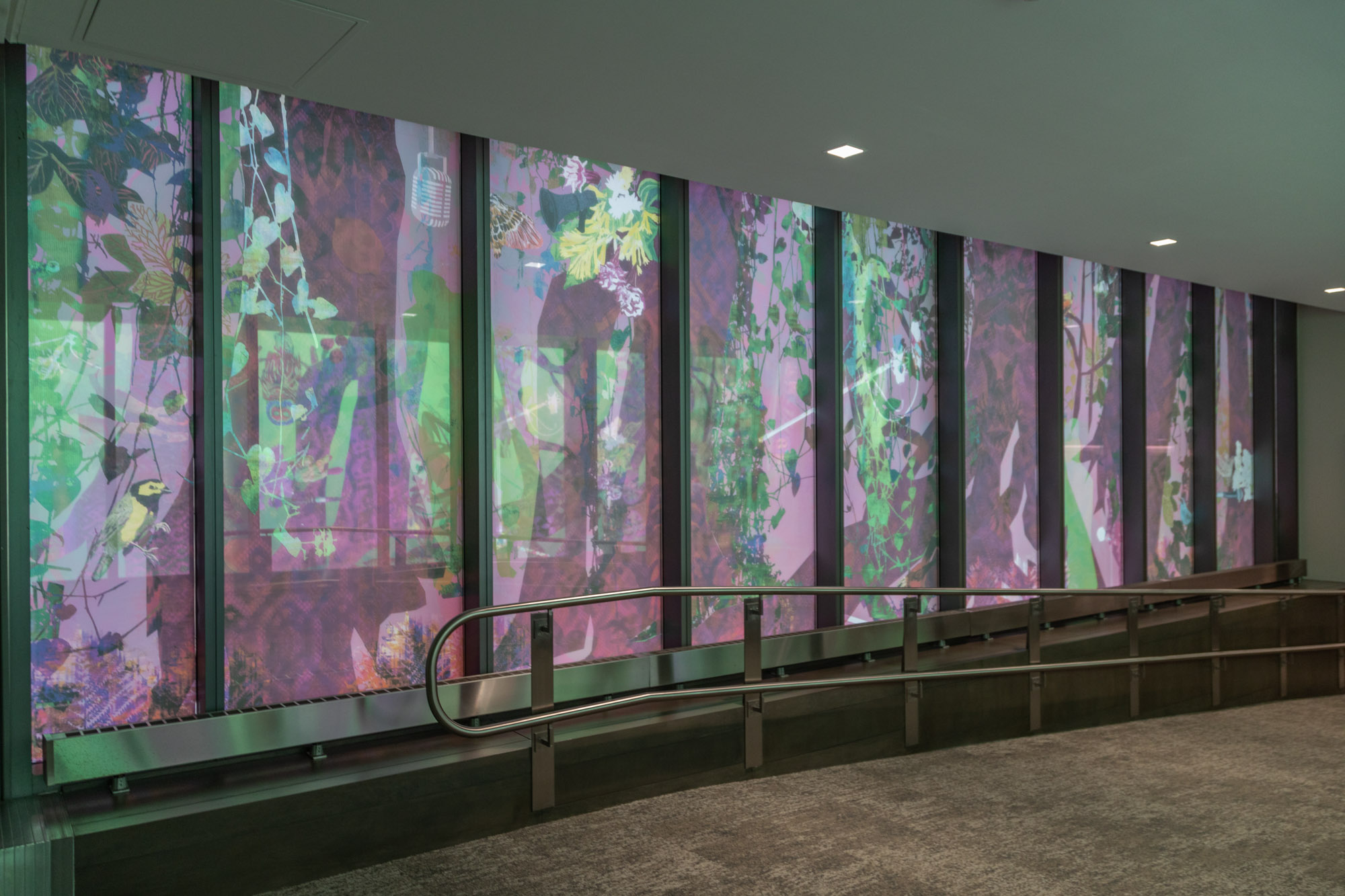
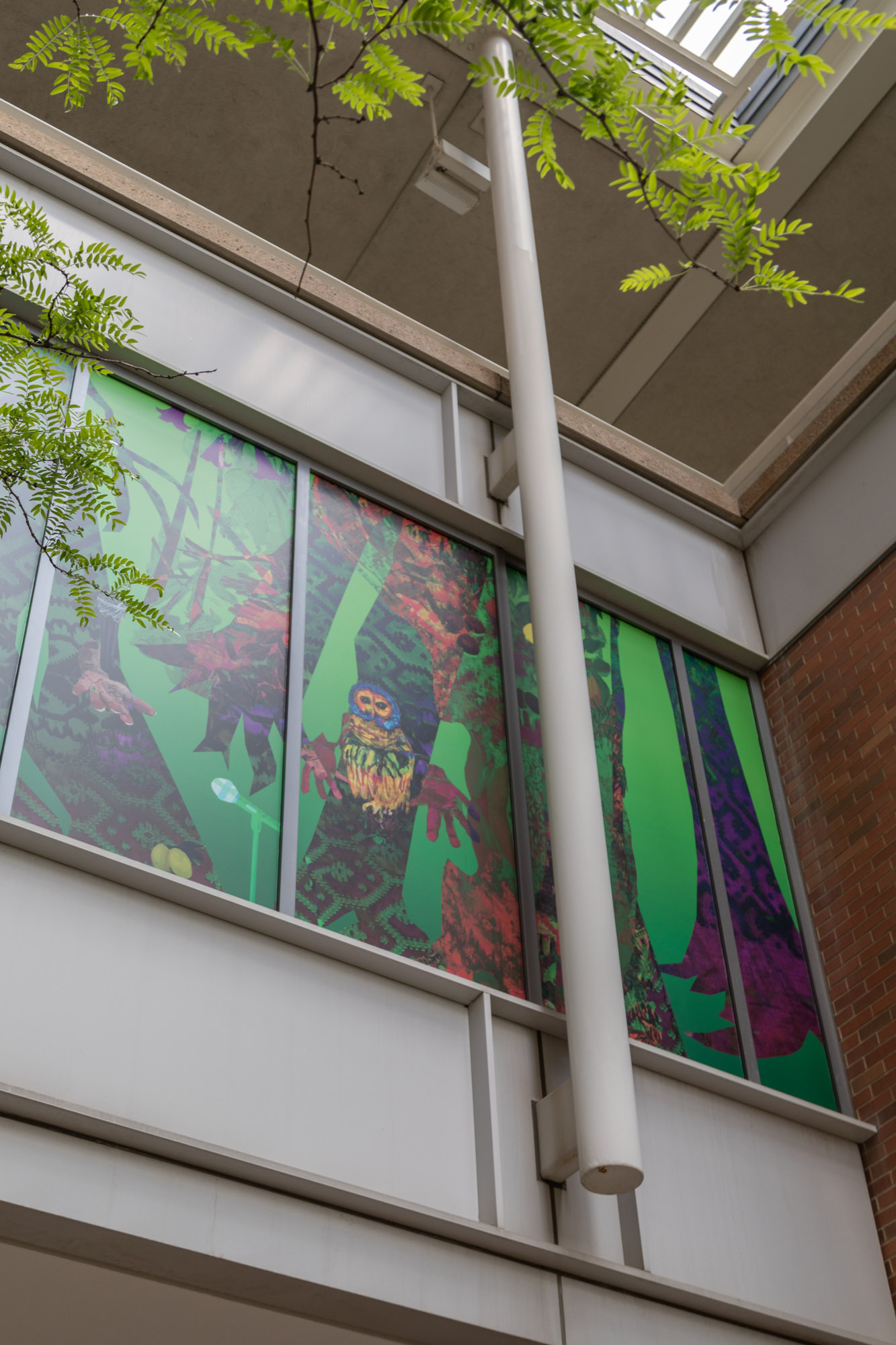
A two-sided composition rife with meaning-laden motif, Tuning Forest is brightly green on one side and purple on the other. Across her work, Mukherjee incorporates Bengali sari cloth – here in the patterning wrapping the trees – referencing Indian diasporic culture and infusing her imagery with a metaphor for feminine power. Amidst these sari trees, Mukherjee renders a space dense with life, from lush flora – night blooming jasmine, tuberose, nerve plant, brugmansia, datura, olive, fig, lemon, mango, tropical rainforest liana, and ostrich fern – to several species of extinct birds, including a rainbow owl native to the hardwood forests of the American West that was nearly hunted to extinction in the early 20th century.
Silhouetted humans appear amidst plants and animals, their forms inspired by an ongoing collaboration with choreographer Hope Mohr. Since 2017, Mohr and Mukherjee have worked together to compose pieces of dance that react to the climate crisis. Still imagery from these performances populate Mukherjee’s urban forest. Standing microphones punctuate the composition, evoking voices in need of amplification. For Mukherjee, microphones urge us “to listen to the landscapes we carry internally, the forest of our home, the wild space that beats within us.”