Alexi AntoniadisI-Beam Ballad
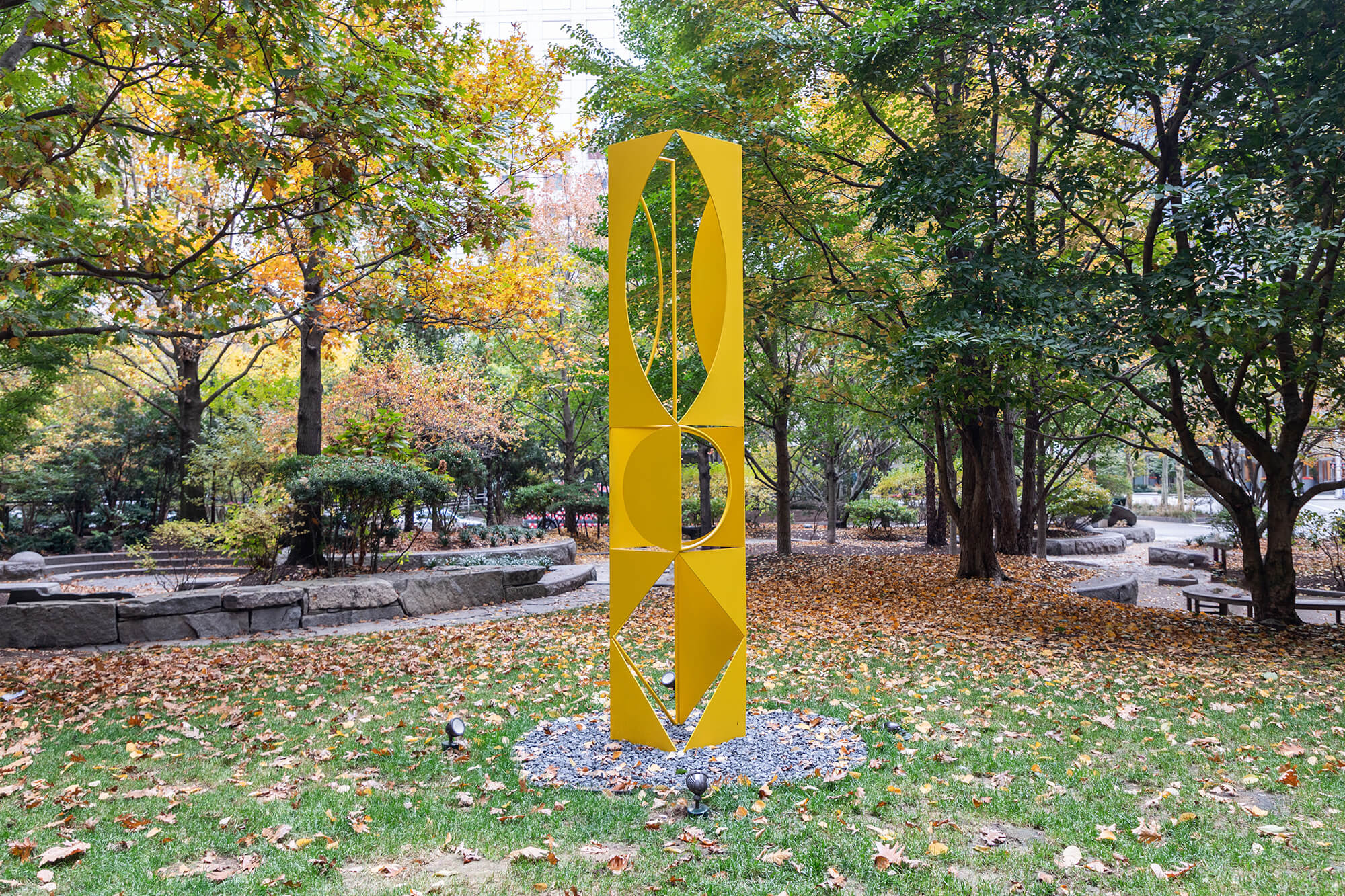
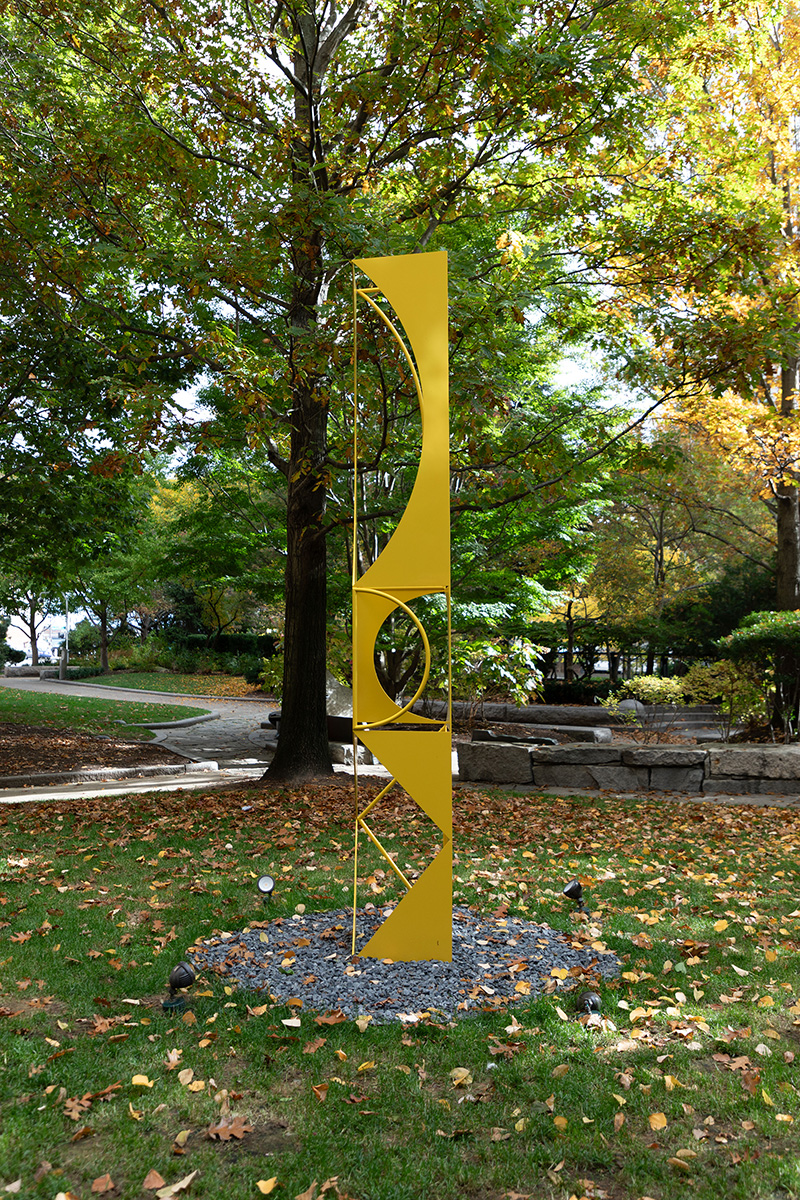
Alexi Antoniadis was born in California but raised in Boston during the 1980s and 90s skate and graffiti scene. As a teenager, one of his most memorable encounters with public art was at a favorite skateboarding spot – a modernist sculpture nicknamed Metals set in the brick and concrete brutalism of downtown Boston – where he experienced art as a “skatable object” and public space as a place for self-expression. The experience and ethos of that era stuck with him, informing a fascination with form and materials that can still be seen in his art today, metal sculptures that exist at the intersection of painting and sculpture in their combination of solid metal planes and linear elements. As viewers walk around I-Beam Ballad the shapes appear to open and close, revealing a piece that evolves depending on the perspective of the viewer. The melding of the second and third dimension exists throughout Antoniadis’ multidisciplinary practice – each of his sculptures begins with spontaneous experimentation in drawing that he expands upon in metalwork.
In addition to finding inspiration in the urban environment, Antoniadis is influenced by the aesthetics of skateboard graphics and comics, as well as the histories of Cycladic, Pre-Columbian and Modernist art. Sculptors in the 20th century distilled their process to create work that was increasingly abstract, used simplified forms, and employed industrial materials. Antoniadis continues this trajectory in his work. The interlocking planar forms, bright primary color, and use of negative space recall Alexander Calder’s metal works, while his love letter to the ever functional, standard steel I-beam cites Mark di Suvero’s monumental public sculptures. Here, Antoniadis cracks open the hard-lined formalism of Calder and di Suvero in I-Beam Ballad, to connect to the world that we know – the familiar architecture and design of the city. Antoniadis calls this commission for Eastport Park an “architectural poem,” a human-scale riff on the evolving skyline of the Seaport xx.